Oh, Canada: Nanaimo Bars! January 2010 Daring Baker Challenge

The January 2010 Daring Bakers’ challenge was hosted by Lauren of Celiac Teen. Lauren chose Gluten-Free Graham Wafers and Nanaimo Bars as the challenge for the month. The sources she based her recipe on are 101 Cookbooks and http://www.nanaimo.ca/.

I had never heard of Nanaimo bars, or even of Nanaimo, BC Canada. I also was unaware that some people actually detest these bars and even chose to sit this month out. Being from the Midwest, where bar-making is somehow an inherent gene, I was more than excited to make them. I pretended to not be so excited to eat them, since there was well over a half pound of butter in one 9x9 baking dish... but they were delicious, and completely worth the splurge. (It also helps that I was able to give half the pan to Maeckel, and that they freeze like a miracle!)

I actually
did this challenge on the 8th of the month, instead of waiting until the last second - which has sadly become my usual habit. Though Lauren chose to use gluten-free ingredients (her recipe is here), I opted to use my pantry staples. As I grow in experimentation of the gluten-free universe, I may try these graham crackers again using rice flour and the like. But for this challenge, I used the 101 Cookbooks recipe which is actually Nancy Silverton's.
I adore Nancy Silverton, and credit her for my original love of baking bread. Though, I don't follow her rather labor intensive approach, reading all about her method a few years ago was fascinating, and obviously the stuff of passion that is absolutely infectious. You can tell that dough runs in her veins. Ordinarily, I wouldn't even consider altering a proportional baking recipe of hers, such as this one for graham crackers, but I did - since I wanted to use whole wheat flour instead of all-purpose.


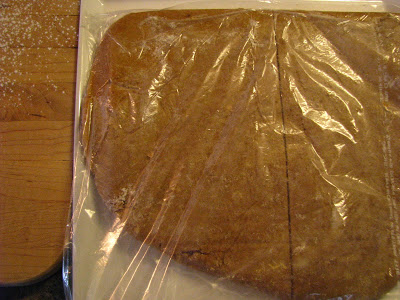
I did use the food pro to mix everything up, and since I used the wheat flours, I knew I would need more liquid. Fortunately, there were verbal clues as to how this dough should feel: very soft and sticky. I simply added a splash of half and half and pulsed until the dough looked appropriate enough to me. Then I dutifully stashed it in plastic and placed it under cold storage for 2 hours as recommended. When it came to the rolling, however, I did not refrigerate the cut crackers for 30 minutes prior to baking as recommended. I simply don't have space in my fridge for half-sheet pans unless it is completely empty. Happily, it worked just fine!
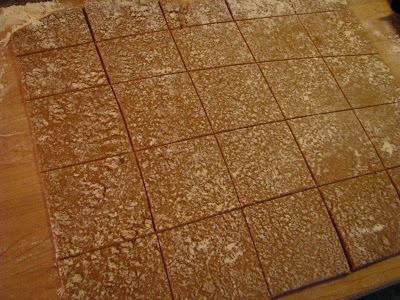
Whole Wheat Graham Crackers (by way of 101 Cookbooks, Nancy Silverton and Rebecca Gagnon)
  • 1 c. whole wheat flour (I use King Arthur Flour)
  • 1 1/2 c. white whole wheat flour (KAF)
  • 1 c. dark brown sugar
  • 1 t. baking soda
  • 3/4 t. kosher salt
  • 7 T. butter, cut into 1 inch slices and frozen
  • 1/3 c. honey
  • 5 T. milk (I used the 1% I had on hand)
  • 2 T. vanilla extract (this is the main flavor component, so try not to skimp!)

Combine flour, sugar, soda and salt in a food pro - or a stand mixer with paddle attachment. (If using the stand mixer, I'd probably cut my pieces of butter a bit smaller before freezing them.) Pulse (or mix, if using the stand mixer) to blend, and then add frozen butter. Pulse or mix until the mixture resembles coarse meal.

Mix honey, milk and vanilla and add at once to the dry mixture. Pulse or mix until a dough comes together, using a couple of T.'s more of milk or half and half to make the dough feel soft and somewhat sticky.

Form into a disk about an inch thick and wrap in plastic. Refrigerate for 2 hours or overnight.

Preheat oven to 350. Divide dough in two halves, and roll out to about 1/8 of an inch, and cut into squares using a pizza roller or fluted pastry wheel. Gather scraps and set aside. Transfer to baking sheet lined with parchment and bake 12-15 minutes until browned. They will continue to harden as they cool. (I actually re-baked some of my first batch when they were not crisp enough after cooling, and it worked fine.) Re-roll any scraps and cut into squares or use cutters to make shapes. If you prefer crackers with a cinnamon sugar topping, sprinkle the mixture on the crackers prior to baking... you may use the proportion 1 t. cinnamon to 3 T. granulated sugar.
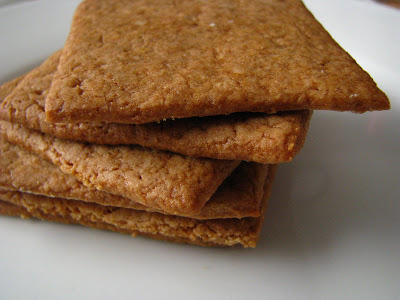
I omitted the cinnamon sugar topping, since I knew there would be plenty of sugar in my finished product. The square crackers above were the first rolling, using plenty of AP flour to prevent sticking. Don't be shy with the flour either, since it is extremely sticky, especially since I did the additional liquid by feel. I made a second batch of crackers later in the month, complete with cinnamon sugar dusting, and didn't add quite as much additional milk. Still sticky! Fortunately, the texture is the only thing that changes with additional rollings and additional flour on the board. I like them both ways equally.


The stars were the very last rolling, scraps really, and were probably my favorites since they were nice and crisp. Graham crackers have officially made the list of things I'll never buy again.


No complaints from my taste tester, either. We now have a graham cracker spread with peanut butter nearly every day for a snack. One day, I had some leftover MonkeyShake (bananas, milk, honey and cocoa powder), and happened to eat a graham cracker spread with peanut butter while I was drinking it... I don't even need to tell you how good that was!
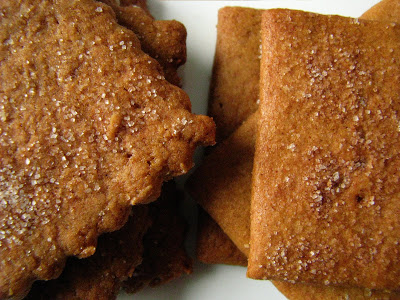

The second batch later in the month. I need to invest in a fluted pastry wheel, since I used a fluted french fry cutter, and it wasn't working so well.

So, now on to the actual bars! As if the graham crackers alone aren't worth their weight in gold for this month's challenge, I now knew that bars made with them had to be wonderful. You can, of course, make them using regular store-bought graham cracker crumbs, but what fun would that be? The Nainaimo link above has the recipe.

When I began my melting of a whole stick of butter together with sugar and cocoa powder, I knew that I was going to be in for something special. Everything is heated in the top of a double boiler, and when hot and melted, an egg is added. It's startling to see how thick the hot mixture becomes. It is then added to a mixture of unsweetened coconut, ground almonds and a cup and a half of fresh graham cracker crumbs and pressed into a baking dish.

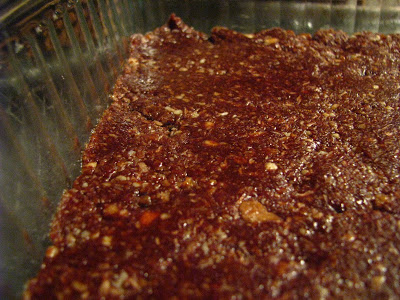
I chilled it well at this point, before adding my other two layers. After an hour or so, I mixed up the mostly butter "frosting" layer for the middle.
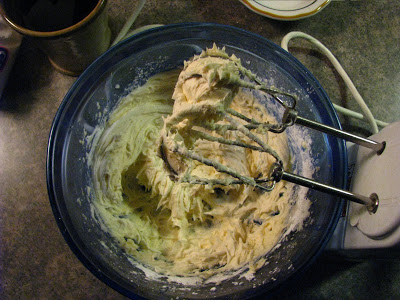
After sitting another hour or so, I melted the now small amount of butter - 2 T. - with 1 oz. of bittersweet chocolate for the ganache top. I had to spread quickly since I had such a firm and cold base, and the chocolate was cooling very fast.

My only mistake was trying to cut the bars too soon out of the fridge. I was eager, after all, to taste these. They were ragged and tasty, though not nearly as professional and texturally pleasing as the ones I cut after sitting at room temperature for 30 minutes. All of the butter in the middle layer became infinitely more palatable, and the whole bar tasted like the most amazing and luxurious candy bar you've ever had. These are rich, and one bar certainly will hold you for a while.


I was secretly glad my Husband knew there was coconut in them and wouldn't even take a bite... he dislikes it except for, strangely enough, in curry. I served them when Maeckel came for dinner, and then sent some along with him. The rest popped into the deep freeze. I have only 2 left, that I'm still saving for some dessertless occasion. One bar on the counter at room temperature thaws in about 3o minutes - not a bad wait for bar perfection!

Thank you to Lauren for this month's challenge! I'm glad to know of Nainamo, BC Canada, and of these bars of legend. This challenge did make me stop and think a bit more about food allergy. I am becoming increasingly perplexed with the amount of food allergy in the world, and secretly wonder if all this genetic modification and chemical application in our agriculture is partially to blame. I am thankful that should food allergy arise, there are inspired people working on ways to make an "eggless" egg so to speak, and the creative abilities of trial and error home cooks out there are astounding. Whatever your allergy or food preference, you can rest assured that a baker somewhere is tirelessly at work so that you can enjoy something sweet on occasion. What a comforting thought that is!

Passions and POSH...

I think I must begin with the Neue Gallerie. I went to this small but exquisite gallery on my trip to NYC in January, in company with E. who had been there before. We first saw the 2 floors of paintings and applied arts, wonderful clocks and chairs, lovingly collected from a swath in history that I could never have experienced firsthand. We then watched a short film on the Museum's founder, Serge Sebarsky, who was from Vienna, and had collected this Austrian and German art from the early 20th century, even when he was not always able to justify the costs. He was a humorous and knowledgeable man, but what stuck with me most about the whole experience, was what E. said after the film: "I just love learning about people who are so passionate!"

Just as Serge Sebarsky was passionate about his own personal history in Vienna, he was passionate about preserving the cultural effects of this area at a time when most Americans were quick to dismiss it. On a food related note, the Gallerie also had a cafe, serving traditional Viennese deserts and coffee, but the line was too long to justify for our museum-ing selves. I will make a point of visiting in the future, especially after attempting that Dobos Torte that ended rather poorly...I'd happily treat myself to baked goods of this caliber!

Where does E's quote at the Neue Gallerie play into my past two days? I'll tell you. (Though I warn you in advance this is a text-heavy post.) I am completely renewed in my excitement for learning. Last year, I declared (albeit silently) it the year of knitting. I had always wanted to learn this, and always rested on the laurels of my fantastic Gram, who raised sheep, sheared sheep, dyed wool, spun wool and then knit. I knew it was in my genes to have fiber arts become an obsession, and finally I made my dreaming a reality. First, with free library classes, and then more importantly, with Loop Yarn Shop classes.

Loop employees are passionate. They LOVE yarn, and anything to do with fiber arts. They are excited to hear your stories and are beyond excited to assist you on your way to becoming obsessed. It is a pleasure to learn from people who are truly engaged in what they are doing, and "walk the walk" so to speak.

When 2010 was on the horizon, (and I hate to admit that I saw those couple of shocking grey hairs), I silently vowed that I am going to do more learning outside of my home. I don't know if I'd say I'm a voracious reader, but I do tend to absorb as much as possible about the things that interest me. While I fell short of an actual degree in college, I poured facts and manual labor into my life concerning the things I loved. In a way, I regret not having the paper, but yet I can't dream of returning. If I were able to run into passionate teachers in every circumstance, I'd be first on line, but sadly this is not the case at most universities. The learning I've relied on has been solitary, though the passion to learn has remained.

It seemed God was holding me to this silent resolution, since I got an email early in January from a Spanish teacher who had held my information from when I had inquired last year. I am so happy to announce that this week, I finally began to learn Spanish. I have always wanted to learn a language, but unfortunately the opportunity in my small town high school wasn't so attractive at the time. It was taught by an old Czech woman, who was taken to fits of rage if a student were to be caught with gum in his mouth: I remember myself having to write out this poem a number of times too great to admit,

The gum chewing student, the cud chewing cow

They look rather different, but similar somehow

And what is the difference, I see it all now

It's the intelligent look on the face of the cow

Now, I'm the first to admit that cows do posses a rather intelligent look, but I could not base my learning another language in the hands of this woman. So, years have passed. My Husband lovingly got me a Spanish course on CD-ROM that I only got 1 disc through. I've met many Spanish speaking friends. I've longed for my tongue to be "loosed" as I always felt it could be; as if I could just listen to enough Regional Mexican music, it would somehow just click in my brain, and I would emerge a speaker. Monday night, I sat in a small class with 4 other students (all of whom spoke Spanish in some form - whereas my only Spanish knowledge is directly related to food), and began my journey to bilingulality with a native speaker who is passionate about her language. She has already instilled in my the confidence that I think is key to go about learning something that requires thinking in a way that is totally different than the thought processes used in my everyday life. I am so excited that I will begin to form a connection to that part of my own ethniticy that, until now, has only existed through food.

I left my camera at home for this event, and the batteries needed charging just after the one shot above.

So in keeping with my new vow of external learning, we come to the Meat of this post: POSH salt. Last summer, I saw these beautiful salt slabs at The Spice House @ the Milwaukee Public Market. They sat, piled on the table, looking as though they were lit from within. I read through the information on the table, and even talked to the shop attendant to glean a little more information. I remembered seeing Mario Batali win an Iron Chef battle when after serving on a mammoth slab of pink rock - and I remembered because Jeffrey Steingarten wanted to take the block home with him. When I read about a class in the Milwaukee Journal Sentinel last week, I called right away. I have always wanted to take a class at the Public Market, and really, I don't know why I never have. Now that my Boy-O is 3, I don't have any more excuses!

I arrived 15 minutes early on the heels of empowerment that my Monday night Spanish class had given me, and found a half-full room! Tables were strewn with plastic silverware and more informational packets, and already smells of baking apples were wafting up from the stoves at the front. I went expecting a demonstration, but wasn't expecting to sample! (The apples were actually pies baked in salt bowls, and they were delicious!) Clearly everyone in the room was as excited as I was, which is a very cool thing. Imagine if all learning existed in this context: Students that are excited to learn, teachers that are more than excited to teach you everything they know! It's fantastic!

Chef Alisa Malavenda began the class by asking the names of more than 40 attendees, and then recited them back. I was not the only one amazed with this. She then continued to use our names throughout the class. If you ask me, I immediately pegged her as passionate. She wants to know her students, and wanted them to feel comfortable to ask questions, and it worked. I don't remember the last time I was in a class where so many people had questions answered, and without the worry of time constraint. Her experience with Salt Slab cooking was also completely comfortable, and she gave numerous tips on how to experiment in your own kitchen with salt block cooking. I found a nice article here of another account of a salt slab class with Chef Malavenda, and also be sure to check out the class list for other classes offered at the Public Market.

POSH is actually an acronym for Primordial Ocean Salt Himalaya, and the salt is actually mined in the Himalayas. There is another huge salt mine located in Poland, and the salt of both locations is considered a sustainable product. It is also considered a "whole" or "pure" food, as it is so old and protected by the Himalayas that pollutants were not able to infect and none of the naturally occurring minerals are stripped away in needless refining or in the mining process. The colors vary from nearly white to black, and the white and pink salts taste the same. It's interesting that the black salt, which was passed around, actually has a sulfuric smell. I personally didn't find it off-putting, but then again, I'm crazy about the smell of boiling vinegar. This black salt is popular in Middle Eastern preparations, where pungent tastes are celebrated. You will find a wealth of information on POSH salt on their website, or if you live in the Milwaukee area, at The Spice House.

I got my own 8x8 slab after class to begin my experimenting, and I can't tell you how excited I am to test drive this new piece of kitchen equipment. I'm planning to bake bread on it tomorrow, and I'm sure I'll let you know how it turns out. I stopped by the Outpost on the way home, and found myself wondering how the fruit I picked up would taste swiped first on blocks of beautiful, pink salt. I excitedly showed my Husband and Boy-O my treasures as soon as I walked in the door, and explained that the salt is naturally anti-microbial so they could lick it if they wanted. Both tried it, and Boy-O kept asking for "one more lick", until I finally said that he could help me with the bread tomorrow.

All of the samples I tried tonight were great, however my favorite was a gravlax. If my preliminary excitement waxes, as I'm sure it will, I may invest in a second slab to make this. The salmon is simply pressed between two slabs of salt for 2 days, until it is fully cured. Fully cured and fully delicious! Now to eagerly await the upcoming cookbook!

It is so refreshing to find people that are passionate about life and about what they do, be it in food or other things. I seem to find that foodies are a good breed, easy to befriend, and good conversationalists, but I'm sure the same would apply to people in a whole host of other interests. Life is such a short experience to waste on not being fully excited about the little things that generate happiness, and how sad to arrive at the end unfulfilled with what you have put in. I only hope in my small way I can inspire others as I am so greatly inspired.

Slow Cooked: The Art of Crockpottery

I got my first CrockPot for Christmas this year. Any slow cooking prior to yesterday, I've done in my trusty (and still favorite) LeCruset French oven. I have been interested in playing around with "crockpottery", however, and did find the perfect initiation for the inaugural use of this small kitchen electric: pulled pork.

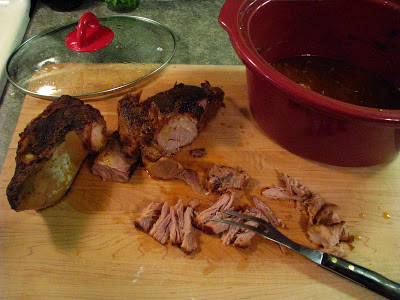
I know I keep mentioning that huge amount of frozen beef and pork in my basement, and I think the reasoning is two-fold. First, that I am still amazed that it is actually there and I alone have to decide what to do with it all. Second, is that my nicely wrapped cuts are fairly vague when it comes to what they are. I took out an about 2 lb. "pork roast", and left it to thaw under refrigeration for several days. When I unwrapped it yesterday morning (not the optimum time for looking at raw meat in my book... fortunately, I at least had my coffee in before beginning), I confess that I have no earthly idea what kind of cut I was looking at. It had a small amount of fat, mostly on the edges, and a good size bone running through it. You can view it on the left of the below photo.

From what I know of slow cooking meat, the first step is always to brown it first on all sides. I had quite an amount of other food to cook yesterday, so I neglected this intentionally. I did, however, slather the entire roast in the remaining spice rub from the tofu last weekend. After a good 8 hours on low, I could have sworn that I did sear it, since it had such a nice spice crust.

The recipe for the sauce was ridiculously easy, just mix up everything in the slow cooker pottery, and lay the meat on top. I got this recipe from my Brother and Sister-in-Law, which was originally from Good Housekeeping. I made it my own by adding some hoisin sauce and garlic cloves to the mix, and of course by using that spice rub. I used half of all the ingredients for my two pound roast, but use the full amounts for the suggested 4 lb.

Slow-Cooked Pulled Pork

  • 1 medium onion, frenched. (I love this method of slicing onions, and use it frequently after learning about it from Alton Brown. This post from Simply Recipes explains it well, and also has a nice looking caramelized onion quiche for you to practice on!)
  • 1/2 c. ketchup
  • 1/3 c. cider vinegar
  • 1/4 c. hoisin sauce (optional)
  • 1/4 c. dark brown sugar
  • 1/4 c. tomato paste
  • 2 T. sweet paprika
  • 2 T. Worcestershire sauce
  • 2 T. yellow mustard
  • 2 to 4 peeled garlic cloves, each cut into 4 pieces
  • 4 lb. boneless pork shoulder blade roast, cut into 4 pieces (Obviously, I used a two pound roast with a bone, and it was just fine... It also fit perfectly into my oval CrockPot, so I didn't need to cut it!)
  • 1 1/2 t. each salt and pepper - which you may omit if using the spice rub like I did...

This recipe was written for a 4 1/2 - 6 quart slow cooker, and should yield at least 8 cups of pulled pork. Stir everything in the slow-cooker pot until combined, add pork and turn to coat.

Cook on low setting for 8-10 hours. At the 8 hour mark, I turned it off, and let the meat cool to reasonable handling temperature. I shredded the now amazingly tender meat with two forks, judiciously leaving out conspicuous bits of fat, and added it back to the pot. I mashed up any visible garlic pieces, too. You could boil down the juices a bit to reduce if it looks like it will be too watery, but I found that it was the perfect amount for the pork I used. Also, since I knew I wouldn't be eating it for a day, I figured it would marinate and absorb a bit as it sat.

I'm lucky that if for some reason I don't feel like making bread or rolls, we have a great Italian bakery moments from my house. Canfora Bakery has the best "Dutchie Crust" rolls, that even if I tried I doubt I'd be able to mimic. I also love the camaraderie that exists when I stop in with the rest of the after-church-traffic to take a ticket and wait in line... They always have a pot of coffee on, and samples of coffee cake or other baked goods for those who are waiting patiently without a 3 year old.

Back in my airport-working days, I'd see grocery bags of hard rolls being consumed with butter and cups of coffee on breaks. Since we had a number of ex-factory workers on our early A.M. shifts, I was schooled that this was a typical breakfast for the over 50 set. If you want the true Milwaukee experience of Coffee and Hard Rolls, these are the ones to go and seek out.

When I tasted my pork today at lunch, I couldn't help thinking something was missing. A quick addition of some of my candied jalapenos solved that. I even drizzled some of the vinegary, sweet-hot canning liquid on there as well. Perfection achieved.

Fields of Meatballs and Flax Raisin Muffins

I love that my life now is unpredictable enough that at the end of the day, I am even surprised at what I've made. I had no idea what I'd make when I woke up this morning, but I now know, and have an overwhelmingly happy sense of accomplishment.

Boy-O and I decided to go to the Discovery World Museum for the first half of the day, since we had the luxury of a vehicle at our disposal. When we got home, just after Noon, I figured I should plan something for supper. Now that I'm fortunate to have the deep freeze full of brick-hard meats at my disposal, I took out a pound of ground beef. I immediately heard echos of Alton, since there are, according to him, only 2 safe methods of food defrost methods for the modern cook: A.) Under Refrigeration and B.) Immersed in Cold Water. I opted for method B., and began my cold water soak around 12:30. I figured I'd add a little bit of pork to the meat mix, and added 3 of the pork "breakfast" sausage links to the cold bath (in a separate plastic bag, of course) closer to 4 p.m.

Meanwhile, I sauteed the Holy Grail of Italian meatball ingredients - well, in my mind anyway. Onions, red and green pepper and plenty of garlic happily cooking down when I waited patiently for the meat to thaw.

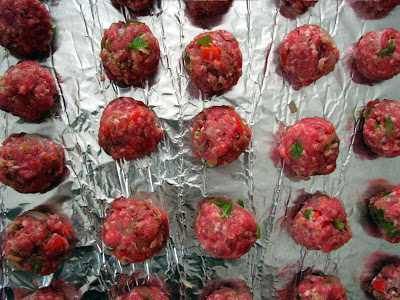
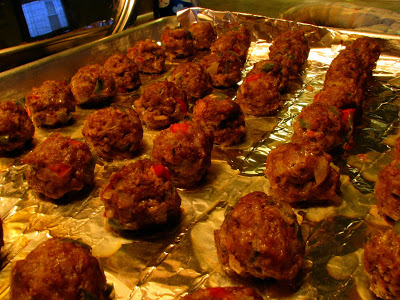
Now would be a good time to mention that I absolutely love portioning things. I love my scoops, one large that I use for muffins and cupcakes, and one small that I use for meatballing and other bite sized confections such as rum balls. There is a zen-like quality to standing still and measuring, cautiously making sure that all things look equal. The methods of my madness are always rewarded in even baking as well.

I like to bake meatballs at 375 degrees f. for about 30 minutes, until they are nicely browned. I tossed them with some marinara sauce (laden with hidden vegetables for my veg challenged boys) that I had in the freezer as well, and let them simmer together when the pasta cooked. This meat is so nice and lean, I didn't even bother baking them on a wire rack.

Not bad for not knowing what would be on the table for supper tonight.

During the defrost time, I took time to peruse The Allergen-Free Baker's Handbook by Cybele Pascal, a recent library rental. I have no food allergy problems in our family, but that won't stop me from reading a cookbook devoted to helping bakers who are. Most of the recipes look amazing, and I'm thinking to either stock up on gluten-free baking supplies, or maybe trying my hand at conversion back to gluten formulas. If you click the link above, it will take you to her amazing website, packed with info and more recipes.

On second thought, an exception to that food allergy statement would be that on my birthday last September, Sasa, GOP and I had raw oysters and my upper lip started to swell after supper. I don't think I was panicking about it, but I do think it really started to swell after I was conscious of it. My friends politely didn't mention anything until I did, and then I think I may have really started to panic when they agreed that it was indeed swelling. I do like to dismiss that event, since I finally started to love oysters and can't really be bothered with the fact that I may be forever unable to eat them. I'm going to give it another 6 months, and see if I can't give them another shot. My Mother does warn me to stick close to a hospital if I should give it another go... since I suppose it could be possible that I would go into anaphylatic shock.

That said, I am always intrigued by food allergy and substitutions therefore. Since we aren't gluten intolerant here, I modified a recipe for Flax Raisin Muffins, since they had seriously small amounts of fat and sugar. My picky Boy-O will eat anything in muffin form, and it's my new plan of attack to pack as much nutrition into a single muffin as humanly possible. These have no eggs, no refined sugar and boast a whole 3/4 cup of flax meal! Not only that, they look fab and the Boy-O ate a whole one after eating his dinner of pasta and peas (the first time he's eaten non-cereal for supper in about 3 weeks!)! Imagine my excitement!

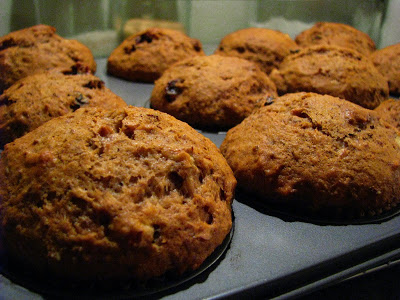
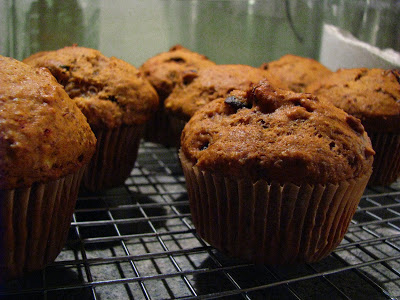
I was even more excited to see these restaurant worthy muffin tops when I pulled the tray from the oven...

Banana Flax Raisin Muffins

Adapted from their gluten-free form...

  • 1/4 c. canola oil
  • 1 c. agave nectar
  • 1 1/2 c. mashed banana (this was 4 medium size)
  • 1 1/2 t. cinnamon
  • 1/4 t. nutmeg
  • 3/4 c. flaxseed meal
  • 1 c. white whole wheat flour (I used King Arthur)
  • 1 1/2 c. AP flour
  • 1 1/2 t. baking soda
  • 1/2 t. kosher salt
  • 1 c. raisins

Preheat oven to 350 degrees f. and line a muffin pan with 12 liners.

combine canola oil and agave nectar, mixing until emulsified, about 20 seconds. You can use a stand mixer with paddle attachment as Pascal recommends, or a hand mixer as I did.

Add mashed banana, cinnamon and nutmeg and mix another 20 seconds. Then add flax meal and mix until combined.

Combine dry ingredients in a separate bowl, and add them to the wet. Mix on low until just combined, then fold in raisins by hand.

Fill the liners to the rim with batter. It's a stiff batter, but if you heap them up over the top, they turn out wonderful!

Bake in center of oven for 25-30 minutes until golden brown on top and tester comes out clean.


I am so glad I tried a recipe from this book! Not only would it be a great help to someone who actually needs the allergen advice, but the base recipes are great. I truly think that I'll make up some gluten-free flour mix and try some of these as written. You can be sure I'll let you know the results.

I suppose I would be remiss in not offering up a humongous Thank You to my Husband who is the reason I am able to stay home and get excited about such things as muffin making and bathroom cleaning. I love every second of being a Stay at Home Mami, and truly consider this the best job I've ever had... and there have been quite a few. I know he's not as apt to excitement over the little things I do, but deep down, I know he appreciates it. I appreciate that he lets me get excited over the details, and doesn't mind my food photography at meal times. I'm sure it doesn't hurt that I let him traipse around in the fields of meatballs either.

Dreams of North African rice pudding...

I finally felt like making the rice pudding that I thought I was craving when I was sick. I'm finally back to normal, and of course in need some dessert around, so last night I found myself stirring a pot of stovetop rice pudding that falls decidedly into the North African vein.

Many years ago, I got a LeCrueset tagine. In fact, I think it was my first piece in my growing collection, and fortunately it was red. I was shopping with my Mom at then Marshall Field's, and we saw an incredible deal on this piece of cookware. She bought it for me as a gift, but in classic Mom fashion, she made me wait to actually get it. That turned out to be a good thing, since Marshall Field's was also clearancing out Moroccan cookbooks, and I got one to daydream with in the meanwhile. I spent hours pouring over the recipes which at the time seemed so foreign to me. When I finally got the tagine, I felt fully ready to tackle a new genre of food.

Photo by Amazon.

The book was Cafe Morocco by Anissa Helou, and since its purchase, I have tried a number of the adventurous North African dishes it contained. I have since felt particularly interested in African cooking, especially how it combines combinations of French and Middle Eastern cooking. I also can not get enough of the spice combinations North African cooking employs: my favorites being my darlings cilantro, cumin and cinnamon. I love how, due to spice, the foods suggest sweetness without actually being sweet themselves, are most times vegetable heavy, and I love that most everything tastes best at room temperature.

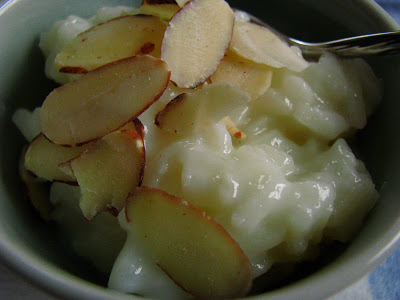
This rice pudding is no exception. After patiently stirring and delivering it to a serving bowl, I tried it hot. I covered it with a towel and then tried it later at room temperature. For lunch today, I tried it cold - since it spent its overnight in the icebox. Without question, it was most superb at room temperature. The secret ingredient, orange flower water, tasted too much like a perfume when it was hot, but mellowed into sultry seductiveness at room temperature. There is something amazing about consuming food that is the same temperature as the mouth it's going into as well. It makes for an overwhelmingly calm experience.

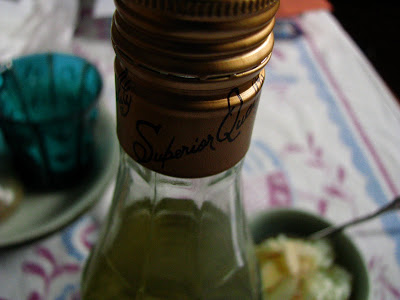
Orange flower water can be a love-it or hate-it experience, but when permeating this silky pudding, even the lukewarm aficionado would declare true love... At least that is what happened to me. When I ate my little bowl after lunch today at gazed outside at the typical overcast and grey January day, I was clearly able to dream North African dreams, complete with spicy colors and aromas.

Moroccan Rice Pudding

This recipe is easily halved or doubled. As written, serves 4-6.

  • 3/4 c. short-grain white rice
  • pinch sea salt
  • 2 T. unsalted butter
  • 2 1/2 c. milk (skim is fine)
  • 2/3 c. confectioner's sugar
  • 2 T. orange flower water
  • slivered almonds for serving

Put rice and 1 1/2 c. water in a medium saucepan with a pinch of salt. Bring to a boil, then reduce heat, cover and simmer for about 12 minutes until the water is almost all absorbed.

Add butter, stir to melt. Turn heat to medium high and add the milk and sugar. When it comes to a boil, reduce heat to medium and boil, uncovered, for about 5 minutes stirring often. (There is cornstarch added to the confectioner's sugar, so boil a bit longer if you like thicker pudding, but also keep in mind that the pudding does thicken as it rests.)

Add the orange flower water and let the mixture bubble for a few more minutes. Pour into a shallow serving bowl, cover with a clean towel, and leave to cool. Just before serving, scatter the almonds over the rice. (Anissa also suggests sauteing blanched whole almonds in a bit of butter, but I prefer using raw slivered almonds since they have a finer texture.)

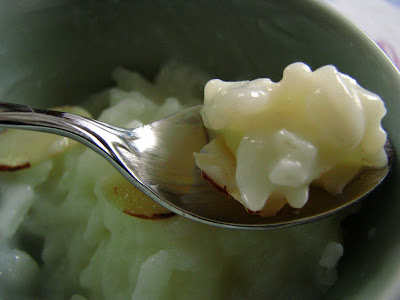
One last note: Anissa suggests rinsing the rice thoroughly before beginning. I did not rinse the rice since (according to Foods That Harm, Foods That Heal from which my Mom read to me over the phone) often there are minerals added to the exterior of white rice prior to shipping, and I felt the extra starch could only lend additional silkiness to the finished pudding. I think I was right in omitting this, since my finished pudding was so silky and smooth.

I think I'm forever through with heavy baked rice puddings. You can actually feel the light permeating this stuff, and hopefully see a bit of it in the photo above. Not bad for a mere half hour at the stovetop...


Moroccan Rice Pudding on FoodistaMoroccan Rice Pudding